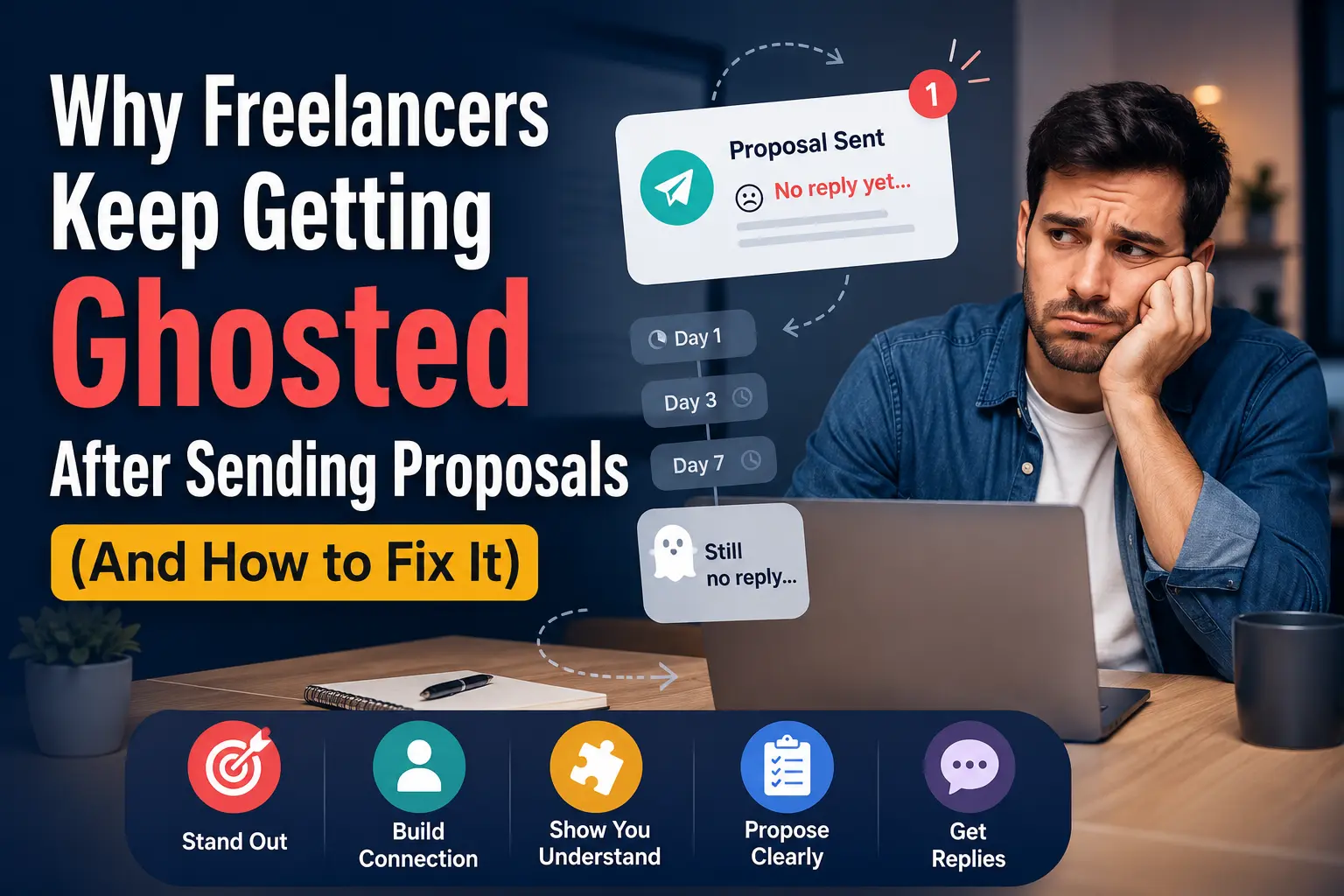
Imagine this: you spend an hour putting together a careful proposal for a potential client. You explain your services clearly, lay out your pricing, attach your portfolio, and hit send. Then you wait.
A day passes. Then three. Then a week. Nothing.
You’ve probably experienced this and wondered what you did wrong. The work looked good. The pricing seemed fair. You were genuinely excited about the project. So why did they just disappear without even a “not interested”?
The frustrating part is, most ghosted proposals aren’t rejected because of price or quality. They’re ignored because the proposal didn’t make the client feel understood — and without that, even the best work samples in the world aren’t enough to get a reply.
Why Freelance Proposals Get Ignored by Potential Clients
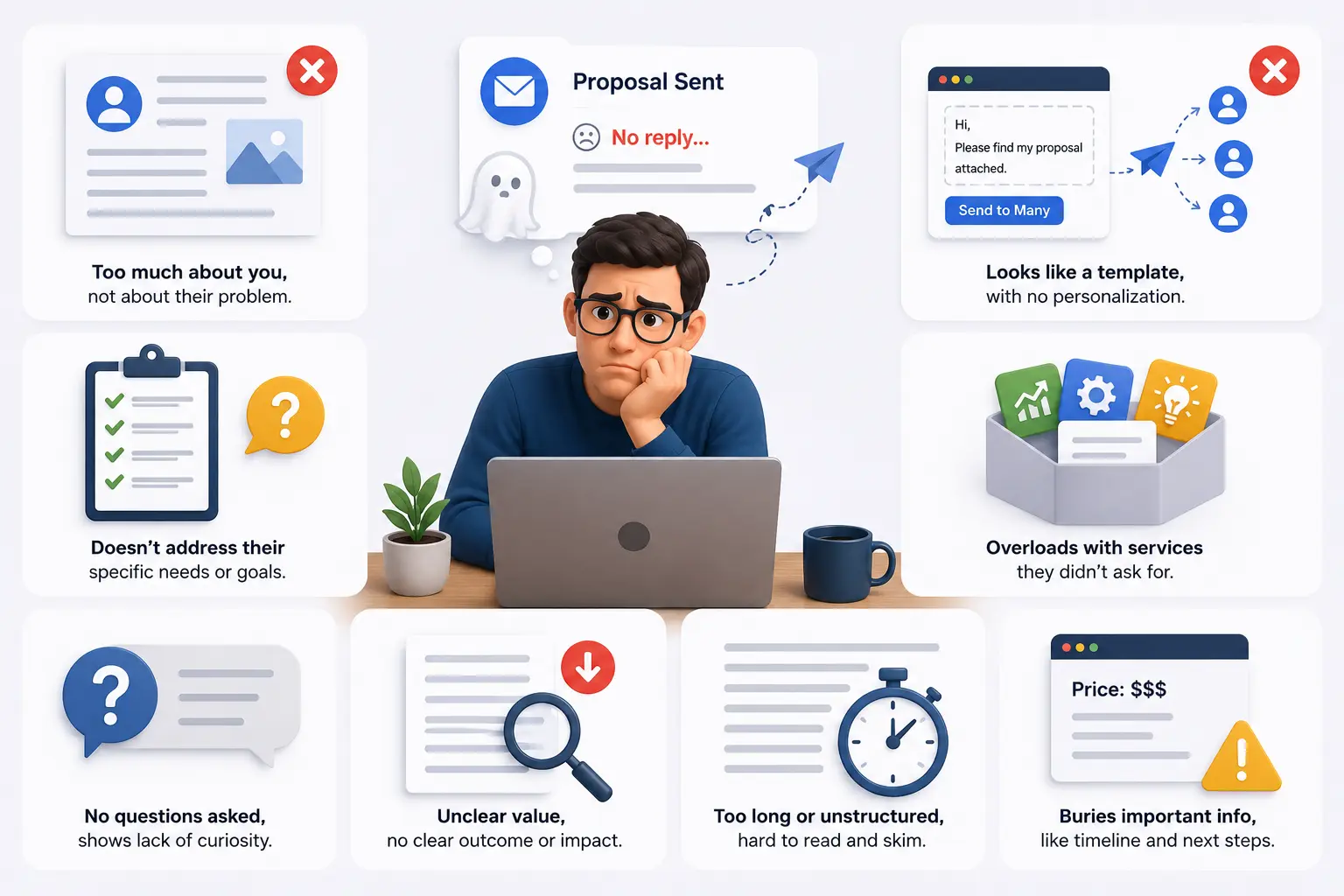
Most freelancers assume a proposal is primarily a document about themselves — their skills, their process, their rates. In reality, a client reading a proposal is thinking about one thing: does this person actually understand my problem?
Imagine a freelancer applying for a project to redesign a local restaurant’s website. Their proposal opens with three paragraphs about their experience, their design philosophy, and a list of tools they use. By the time they mention anything about the restaurant itself, the client has already lost interest — because nothing in the first half of the proposal was about them.
This happens because most freelancers write proposals the way they’d write a resume — leading with credentials and background. But clients aren’t hiring a CV. They’re hiring someone who understands their specific situation and can solve a specific problem. When a proposal doesn’t reflect that understanding quickly, it feels like a template, and templates get ignored.
How Do You Know If Your Proposals Are the Problem
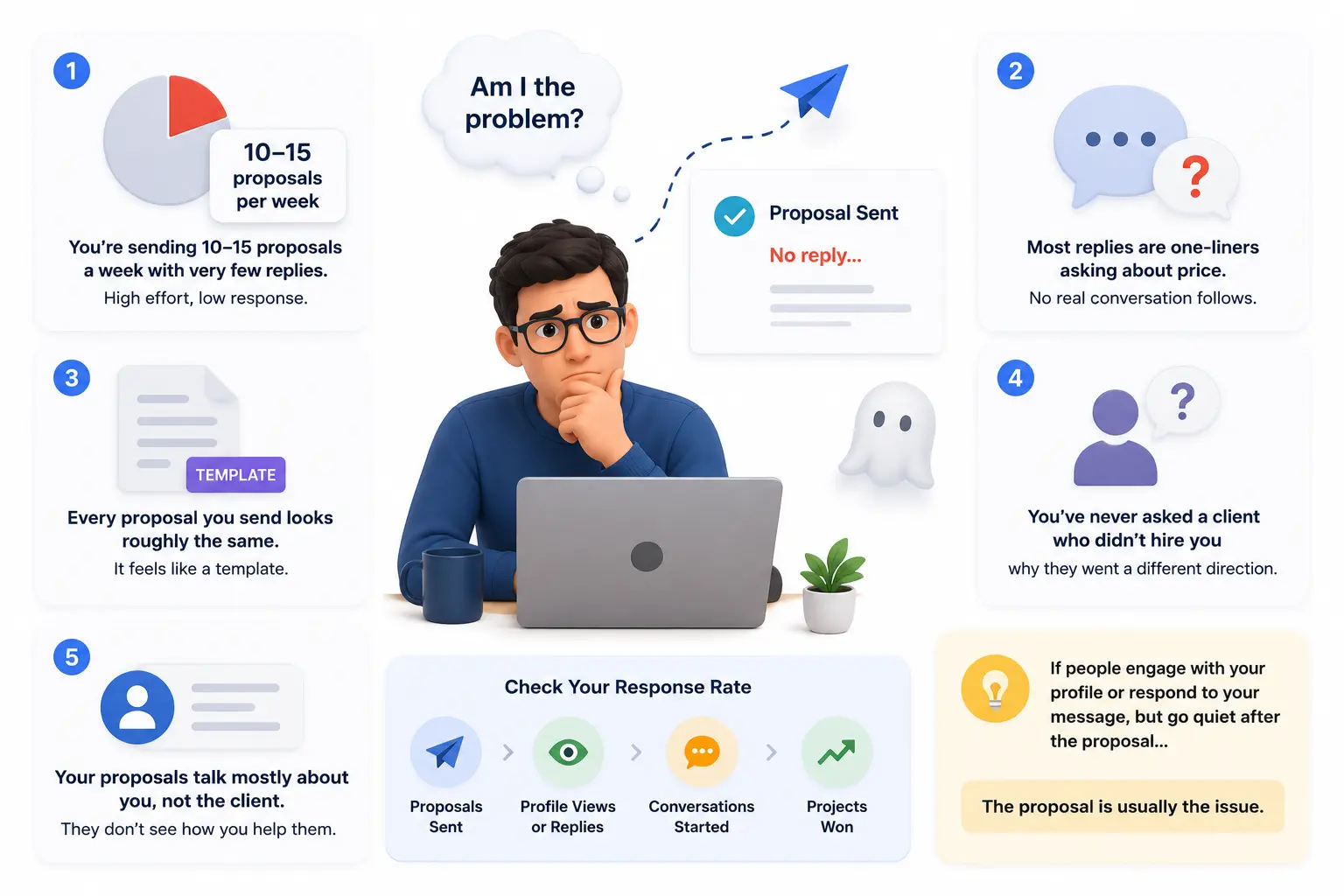
Sometimes low response rates are about visibility — not enough people seeing your profile. But if people are viewing your profile or responding to your outreach and still going quiet after the proposal, the proposal itself is usually the issue. Some signs:
- You’re sending 10–15 proposals a week with very few replies
- Most of your replies are one-liners asking about price, with no genuine conversation following
- Every proposal you send looks roughly the same, regardless of the client or project
- You’ve never asked a client who didn’t hire you why they went a different direction
- Your proposals talk mostly about you rather than the client’s specific situation
Imagine a freelance copywriter who sends the same proposal template to every client — different name at the top, same body. She wonders why her reply rate is low, but the proposals themselves give no indication she’s read the job description in any detail. To the client, it looks like she sends this to everyone, which makes it feel low-effort even if she’s genuinely skilled.
Common Mistakes Freelancers Make in Proposals That Kill Client Interest
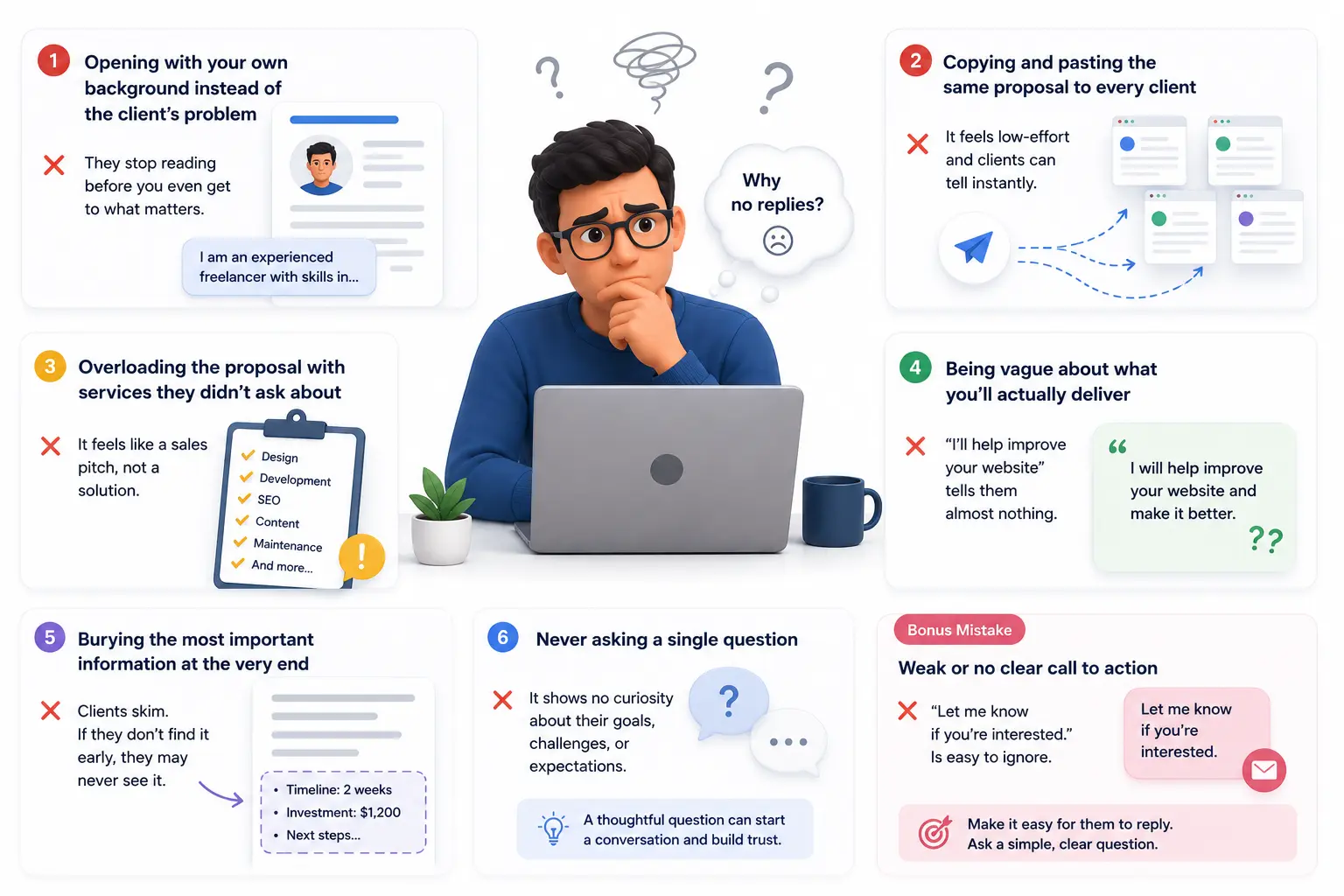
- Opening with your own background instead of the client’s problem — by the time you get to what they actually care about, they’ve already lost attention
- Copying and pasting the same proposal to every client with only the name changed
- Overloading the proposal with services the client didn’t ask about, making it feel like a sales pitch rather than a solution
- Being vague about what you’ll actually deliver — “I’ll help improve your website” tells a client almost nothing concrete
- Burying the most important information, like timeline and what they can expect, at the very end
- Never asking a single question — a proposal that shows genuine curiosity about their project stands out immediately
How to Write a Freelance Proposal That Gets a Reply
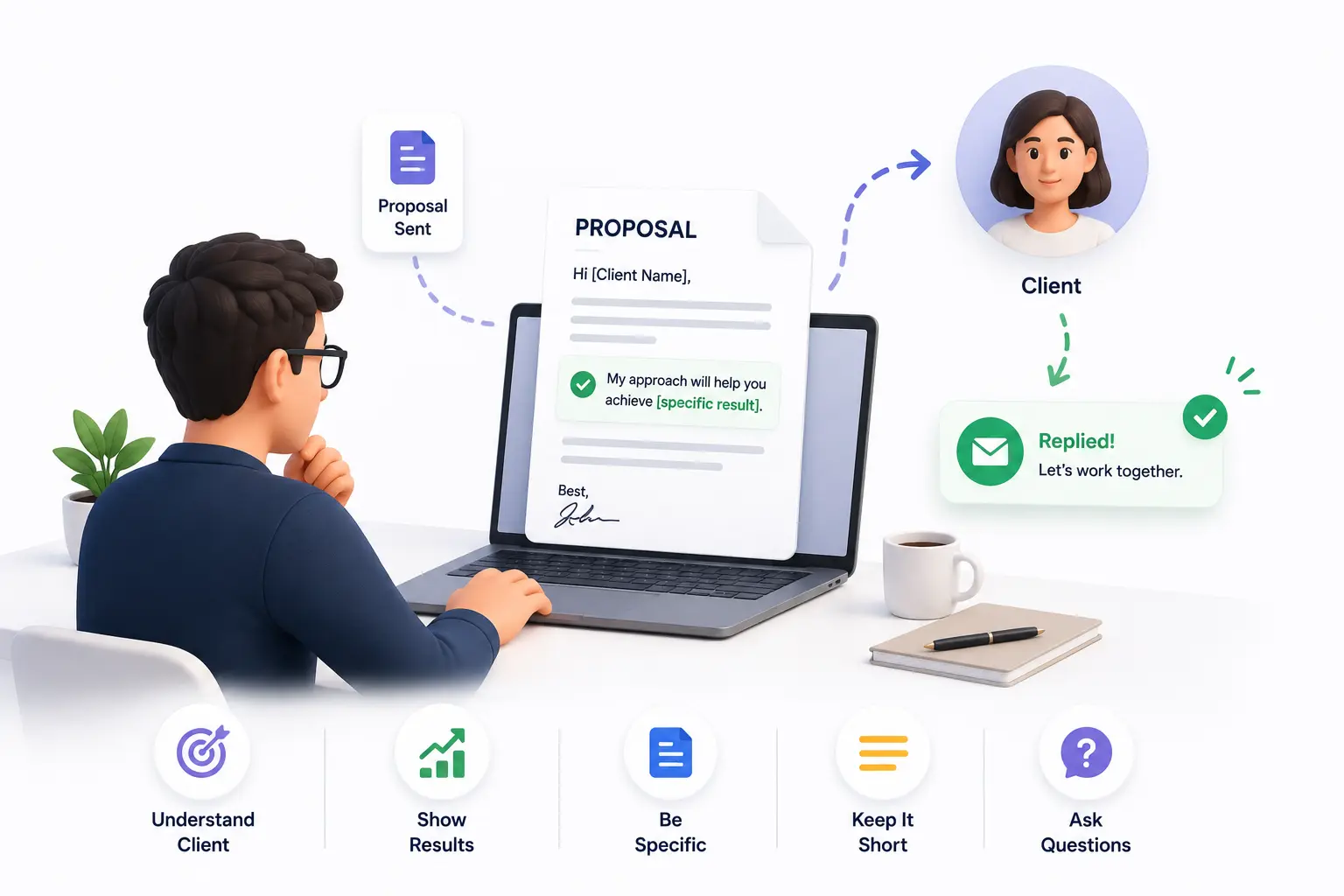
1. Open by showing you understood their specific situation.
Before anything else, briefly reflect back what they described in their brief or posting. Even one or two sentences that show you actually read their project — not just glanced at it — immediately separates your proposal from the majority.
2. Describe the outcome, not just the service.
Instead of “I’ll design a website for your business,” try “You’ll have a clean, mobile-friendly website your customers can actually navigate, with a clear contact and booking flow.” Clients buy outcomes, not services.
3. Be specific about what happens next.
Tell them exactly what the first step is if they say yes. A client who can picture the process clearly feels less uncertain about saying yes. Uncertainty is one of the most common silent reasons proposals get ignored.
4. Keep it short.
Imagine a client who receives twelve proposals in one afternoon. They’re not reading all of them in detail — they’re skimming. A focused, easy-to-read proposal that gets to the point quickly is more likely to earn a reply than a thorough five-paragraph breakdown of your entire career.
5. End with a low-pressure question.
Instead of “let me know if you’re interested,” try “Does this sound like the kind of approach you were looking for?” It invites a response without feeling pushy, and it’s much easier for a client to reply to than a general “waiting to hear back” sign-off.
What Most Business Owners Overlook
Here’s the part most freelancers miss: clients are rarely reading proposals looking for the most qualified person. They’re looking for the person who made them feel most understood.
Two freelancers with identical skills will get different results, because one took five extra minutes to personalize the opening and describe the client’s situation specifically, and the other sent a template. That small difference in effort signals something much bigger — that you’d bring the same level of attention to their actual project.
Timeline: What to Expect When You Improve Your Proposals
Changes to your proposal approach can show results faster than most other freelancing improvements, since every new proposal is a new test. Most freelancers who genuinely personalize their proposals notice a difference in reply rate within the first two to three weeks of sending consistently.
Getting replies doesn’t guarantee conversions immediately — some clients take time to respond, compare options, or come back after a delay. A more realistic measure is: are more people responding at all? If yes, the proposal is working. Converting those replies into paid projects is the next layer, and that usually improves over one to two months of practice.
What Happens If You Ignore This Problem
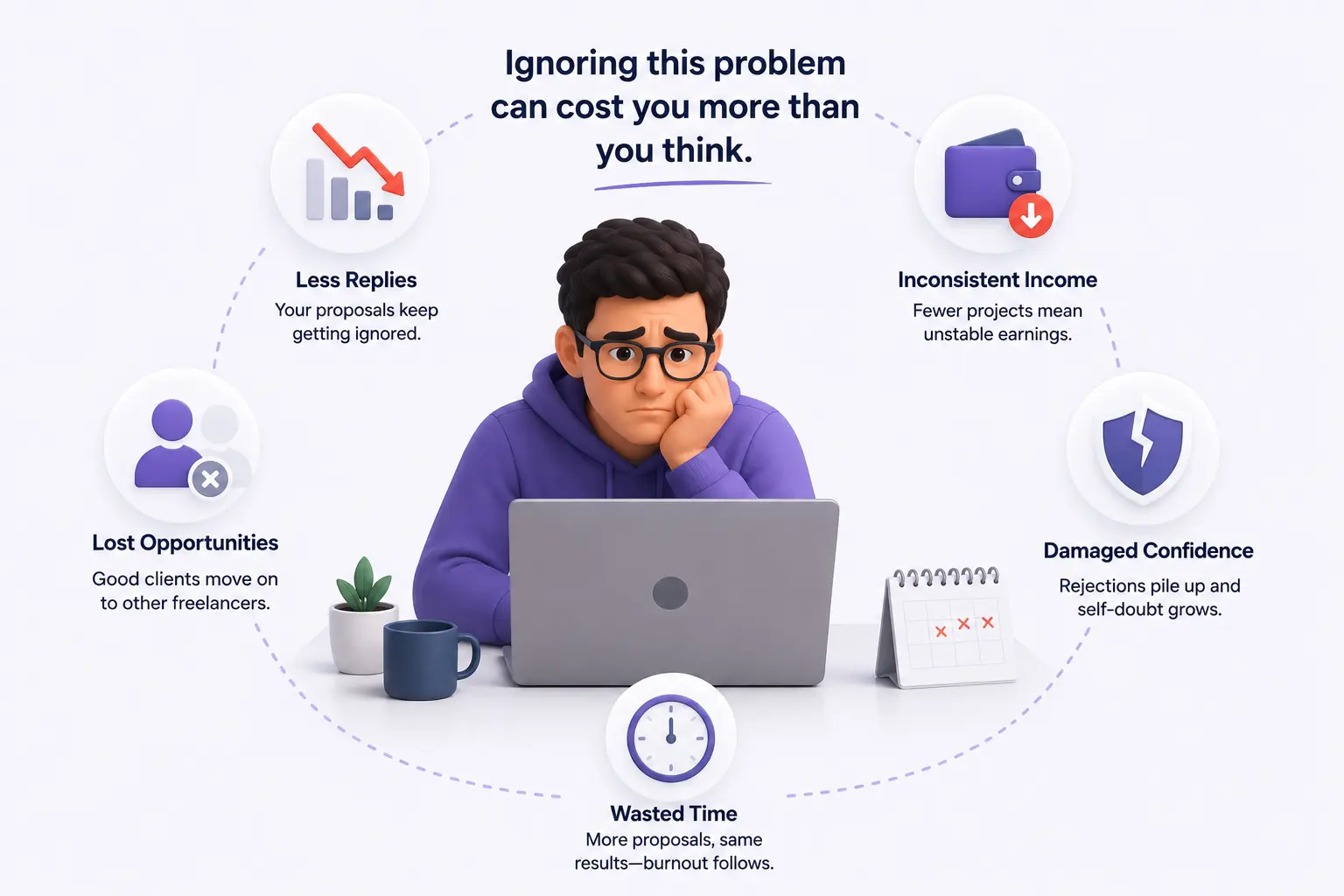
Proposal volume goes up, reply rate stays flat. More time spent writing applications that go nowhere. Frustration builds, rates drop in an attempt to compete on price instead of value. The freelancers landing the better projects aren’t always more skilled — they’re just better at communicating why they’re the right fit for that specific client.
A Quick Action Step
Find the last proposal you sent that got no reply. Read it back now as if you’re the client receiving it. Ask yourself honestly: does this opening make me feel understood, or does it start by talking about the sender? That gap is usually where the fix begins.
FAQ
How long should a freelance proposal actually be?
Long enough to show you understand the project, short enough to respect the client’s time. For most projects, three to five focused paragraphs work better than a detailed multi-page document.
Should I include pricing in my proposal?
It depends on the platform and project. If pricing is expected upfront, give a clear range rather than a vague “it depends.” Uncertainty around cost is one of the most common reasons clients don’t reply.
What if the client’s brief is very short and doesn’t give me much to work with?
Ask a clarifying question in the proposal itself. Something like “Before I give you a full scope, could you tell me a bit more about who your main customers are?” shows genuine interest and often starts a conversation on its own.
Is it worth following up after a proposal gets no reply?
Yes, once. A short, low-pressure follow-up a few days later — “just checking if you had any questions about the proposal” — is completely appropriate and occasionally recovers projects that were simply overlooked.
Should every proposal look different, or is a consistent format fine?
A consistent structure is fine, but the content — especially the opening — should always reflect the specific client and project. The structure is your starting point, not a template to paste unchanged.
How do I know if it’s my proposal or just low market demand causing the problem?
If your profile is getting views and you’re receiving job invitations but still not getting replies after proposals, the proposal is the most likely variable. If you’re getting very few views at all, visibility may be the bigger issue to address first.
Key Takeaways
- Most ignored proposals fail to show the client they were understood — not because of pricing or skill
- Leading with the client’s situation instead of your credentials changes how a proposal feels immediately
- Specific, outcome-focused language outperforms vague service descriptions every time
- Shorter, personalized proposals typically perform better than long, detailed templates
- Improving your proposal approach can show results within weeks, not months
Conclusion
Getting ghosted after a proposal rarely means you’re not good enough. It usually means the proposal didn’t show the client quickly enough that you understood their specific situation and could solve it.
Pick one proposal this week, write the opening entirely from the client’s point of view, and see what changes. That single adjustment — starting with them instead of yourself — makes a bigger difference than most freelancers expect.