
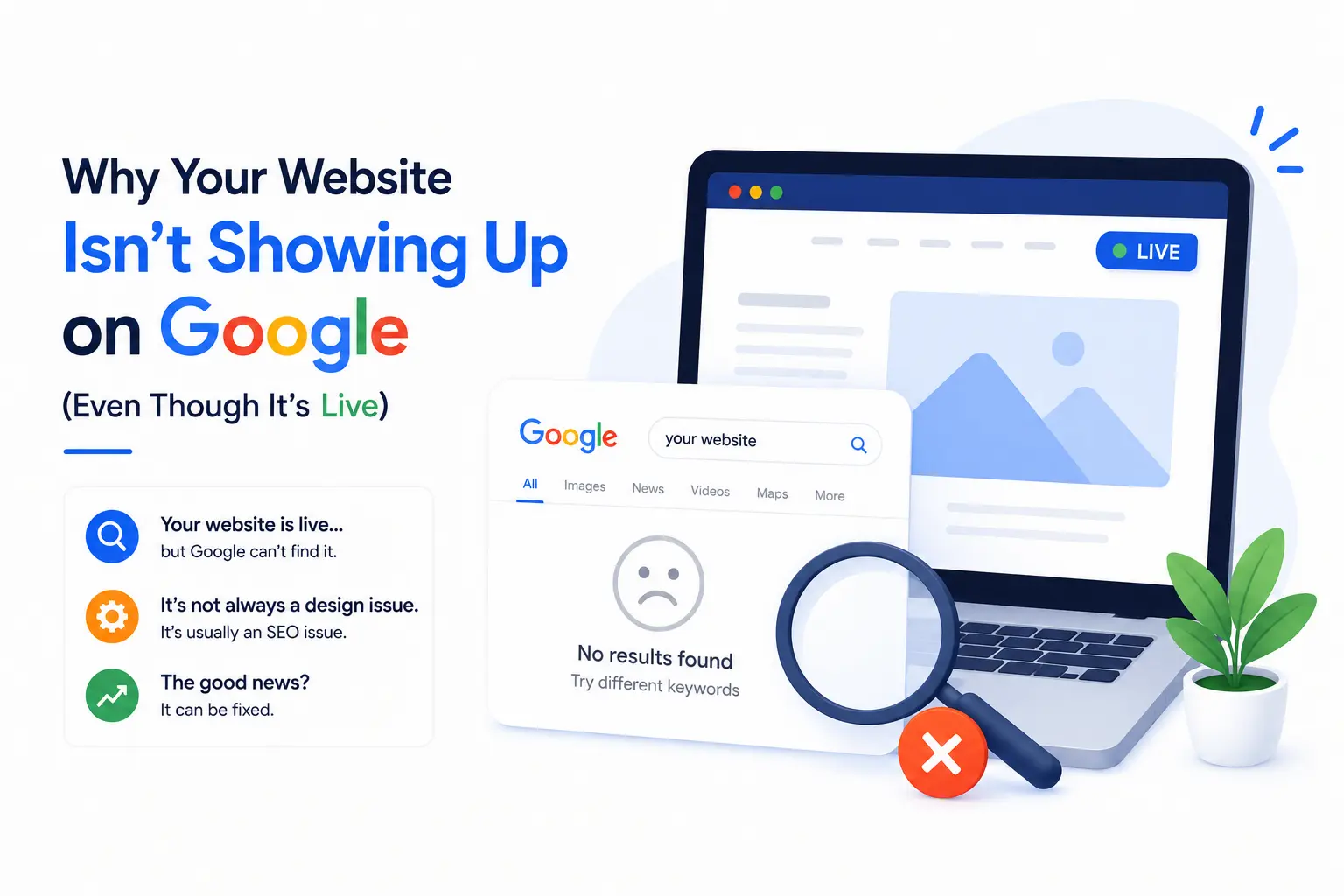
Imagine this: you finally launched your website. It looks clean, it loads fine, your services are listed clearly. Out of curiosity, you Google your own business name a week later, expecting to see it right at the top.
Instead, you scroll through page one, then page two, and your website is nowhere to be found. Meanwhile, a competitor with a far less polished site is sitting right at the top of the results.
You’ve probably experienced this confusion — the website is live, it works, so why isn’t Google showing it? The frustrating part is, having a website and being found on Google are two completely different things. A site can be perfectly functional and still be invisible to search engines.
Why Your Website Isn’t Ranking on Google Search Results
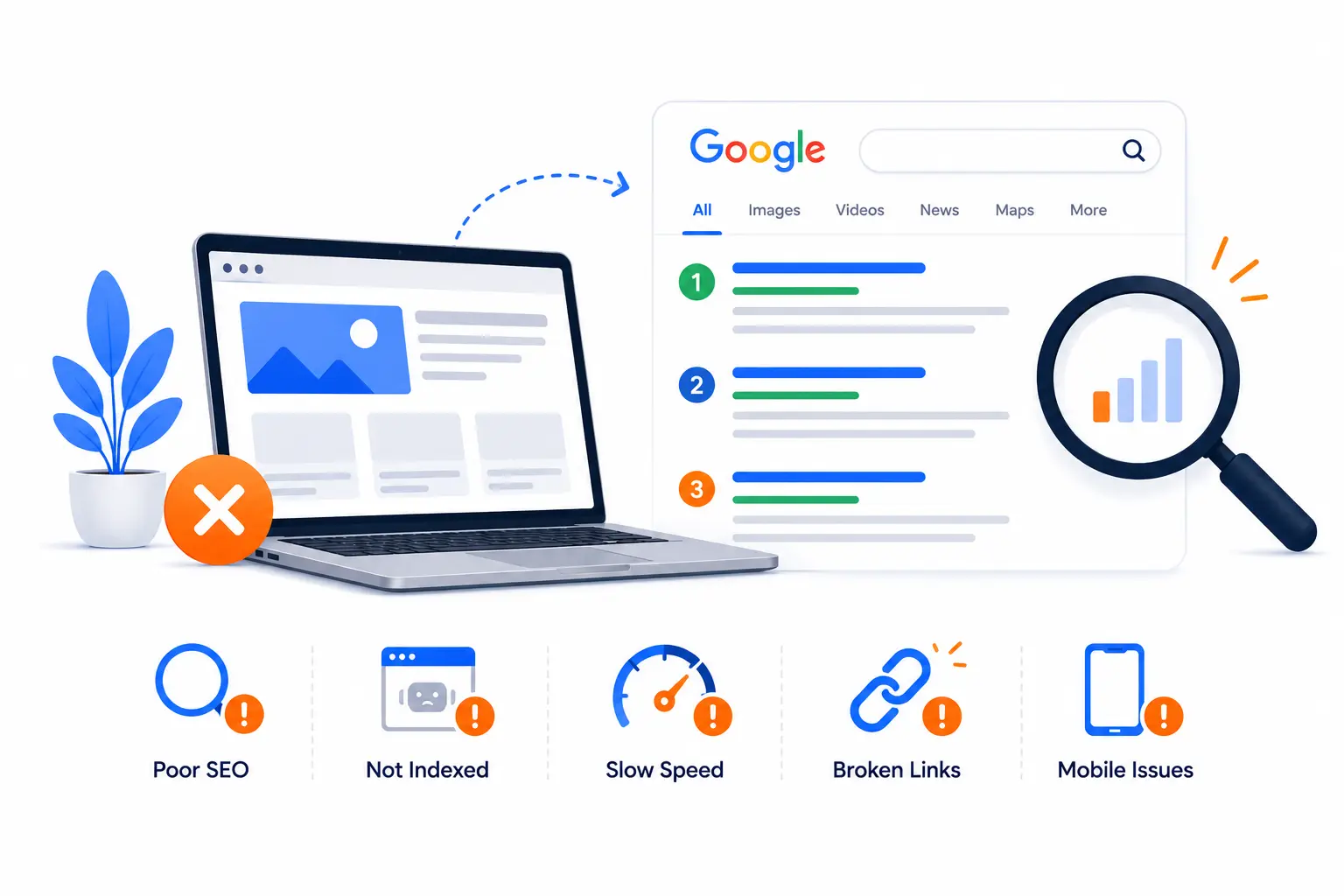
Here’s what usually happens. Most business owners assume that once a website is published, Google automatically knows it exists and starts showing it to people searching nearby. In reality, Google has to discover, understand, and trust your website before it shows up — and that process doesn’t happen on its own.
Imagine a local dentist who launches a beautiful new website but never tells Google it exists, never adds their business to Google Business Profile, and never includes basic things like their city name or services in the website’s text. Google has no clear signal about who this business is, where it operates, or what it offers — so it simply doesn’t know when to show it to someone searching “dentist near me.”
This happens because search engines rely on specific signals: the words on your page, your business location, how other sites link to you, and how trustworthy and established your site appears over time. A brand-new website with none of these signals set up properly is essentially invisible, no matter how good it looks.
Common SEO Mistakes Small Businesses Make When Launching a Website
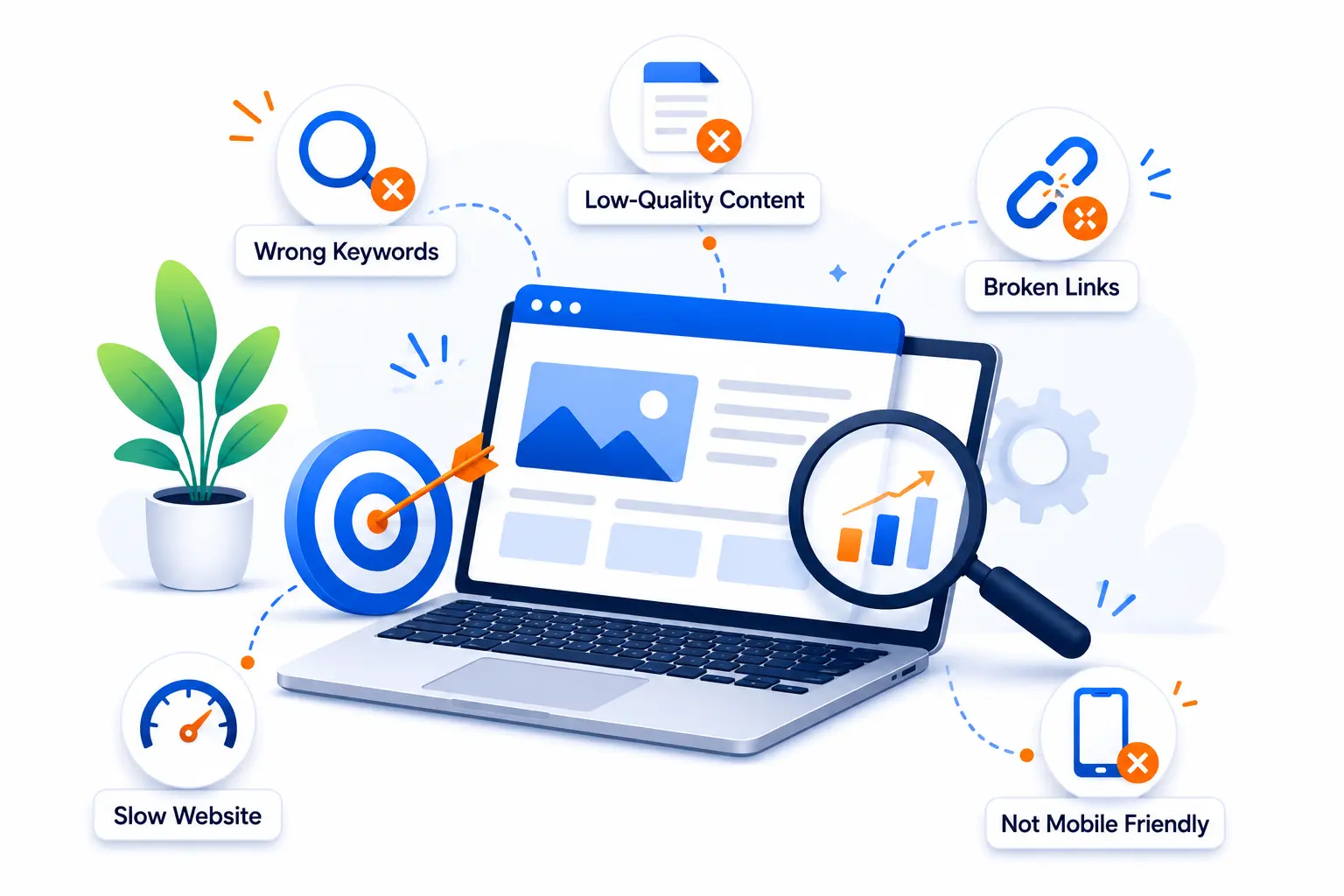
Most ranking problems come down to a handful of repeated mistakes:
- Never setting up or verifying a Google Business Profile — especially damaging for local businesses like clinics, restaurants, and service providers
- Vague page content that never mentions the actual service or city name, like “We provide quality solutions” instead of “Affordable AC repair in Vijayawada”
- No one linking to the website from anywhere — social media, directories, or other relevant sites
- Expecting results within days instead of understanding that ranking is a gradual process, often taking weeks or months
- Duplicate or thin content, where pages have very little actual text for Google to understand the topic
- Ignoring page speed and mobile usability, both of which affect how Google ranks a site
Imagine a freelance interior designer who builds a beautiful one-page portfolio site but writes almost no text describing her services, location, or specialties. Google’s system has very little to actually read and understand, so it has no strong reason to show her site for relevant searches.
How to Fix a Website That Isn’t Showing Up on Google
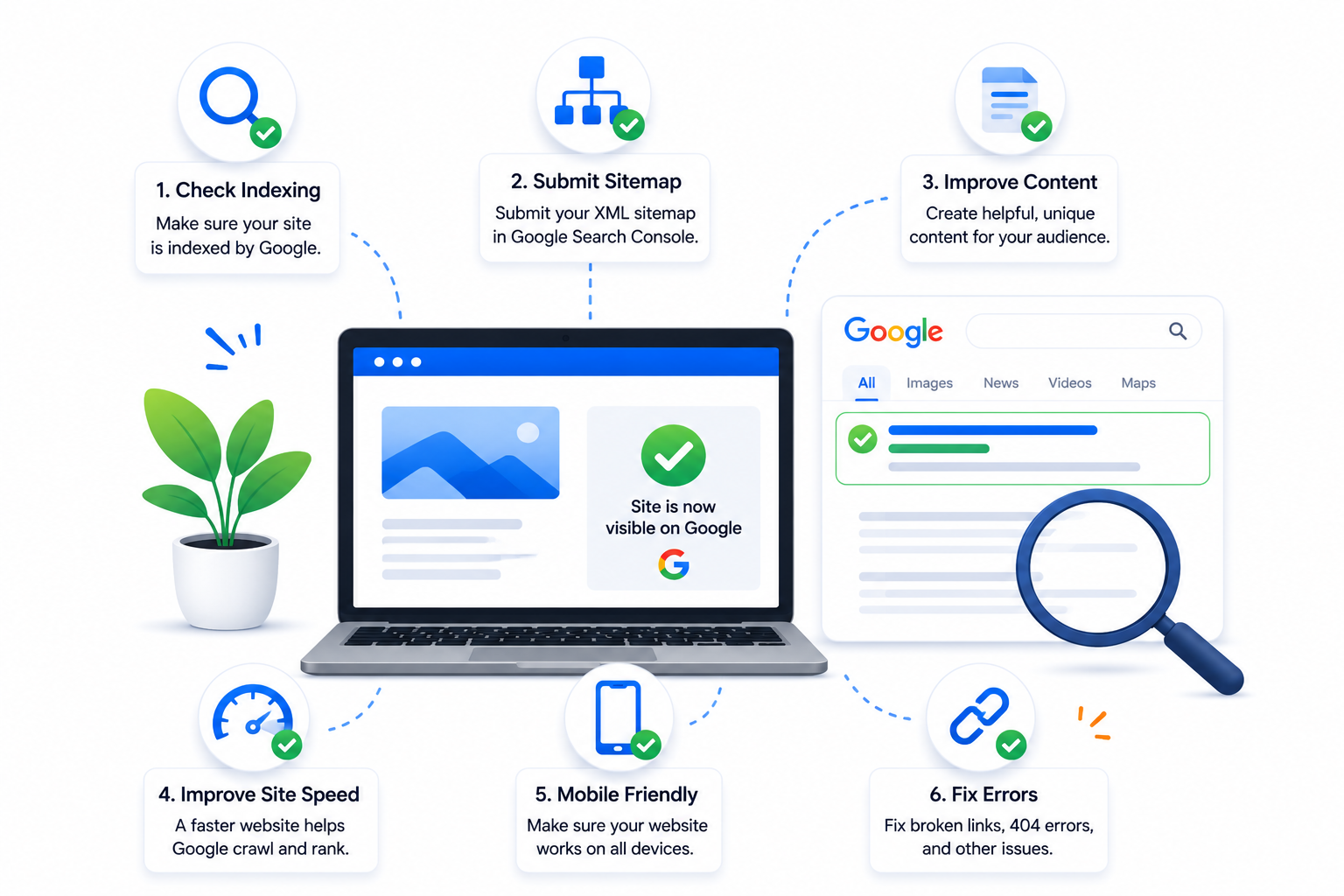
The good news is that most of this is fixable without any technical background.
1. Set up and verify your Google Business Profile.
This is one of the fastest ways local businesses start appearing in search results and Google Maps. If you haven’t claimed your business listing yet, this is usually the very first step.
2. Make sure your service and location are clearly written on your site.
Instead of vague language, be specific. If you run a bakery in Bapatla, your homepage should actually say “bakery in Bapatla,” not just “delicious baked goods.”
3. Add real, useful content to your pages.
A short paragraph describing what you do, who you serve, and where you’re located gives Google enough information to understand and match your site to relevant searches.
4. Get a few genuine links pointing to your website.
This could be as simple as linking your website from your Instagram bio, a local business directory, or a partner business’s site. Each link acts like a small vote of trust.
5. Be patient and consistent.
Imagine a small gym owner who updates their website with fresh content every month — new class schedules, blog posts, updated offers. Over a few months, this consistent activity signals to Google that the site is active and relevant, which gradually improves visibility.
What Most Business Owners Overlook
Here’s the part most people miss: ranking on Google isn’t a one-time setup, it’s an ongoing signal of relevance and trust. A website that’s published once and never touched again sends a quiet signal that it might not be active or maintained.
Most business owners check their ranking once, get discouraged when they don’t see results immediately, and stop paying attention. The businesses that do show up consistently are usually the ones that keep adding small bits of relevant content and keep their business information accurate and active over time.
Tools & Resources
- Google Business Profile — Free and essential for any business serving a local area. It’s often the single biggest factor in whether a local business shows up in “near me” searches and Google Maps.
- Google Search Console — A free tool that shows exactly how your website appears in search results, what people are searching to find you, and whether Google has found any technical issues. Useful because it shows real data instead of guesswork.
- Google’s “Site:” Search Trick — Typing
site:yourwebsite.cominto Google shows you exactly which pages of your site Google has indexed. If pages are missing, that’s a clear sign Google hasn’t fully discovered your site yet.
What Happens If You Ignore This Problem
Visitors searching for your services find competitors instead. Months pass with little to no new inquiries from search. Paid ads start feeling like the only option, even though organic search could be working for free. Trust slowly shifts toward whichever business shows up first — and that’s rarely a coincidence.
A Quick Action Step
Right now, search your own business name on Google and see what comes up. Then search for your main service plus your city, like “salon in Vijayawada.” If you don’t appear on the first page, that’s the exact gap your potential customers are running into.
Frequently Asked Questions
How long does it take for a new website to show up on Google?
It varies, but most new websites start appearing in search results within a few weeks, with meaningful ranking improvements often taking a few months of consistent activity.
Do I need to pay Google to show up in search results?
No. Paid ads are separate from organic search rankings. A well-set-up website can appear in regular search results without any ad spend, though it takes more time than paid visibility.
I have a Google Business Profile but still don’t show up. Why?
This usually means the profile is incomplete or unverified, or your website content doesn’t clearly match what people are searching for. Both need to work together.
Does having a blog actually help my ranking?
Yes, when it’s genuinely useful content related to your services. Regularly publishing relevant articles gives Google more reasons to consider your site active and relevant.
My competitor has a worse website but ranks higher. How is that possible?
Rankings depend on more than visual design — things like business profile completeness, content relevance, and consistency over time often matter more than aesthetics.
Can I do basic SEO myself, or do I need to hire someone?
Many basics, like setting up Google Business Profile and writing clear, specific page content, can be done by a business owner directly. More technical or competitive situations may benefit from outside help.
Key Takeaways
- Having a live website doesn’t automatically mean Google will show it in search results
- Local businesses should prioritize setting up and verifying their Google Business Profile
- Clear, specific content about your services and location helps Google understand and match your site
- Ranking improves gradually with consistent updates, not overnight
- Ignoring this problem means losing potential customers to competitors who do show up
Conclusion
Your website doesn’t need to be perfect to start showing up on Google — it needs clear, specific information and a few consistent signals of activity and trust. Start with your Google Business Profile, make sure your content actually describes what you do and where, and be patient as the results build over time.
A few small, consistent steps today can be the difference between staying invisible and becoming the business people find first.